Showing posts with label Huntington's Disease Awareness. Show all posts

Friday, November 5, 2021

What a Difference a Year Makes

Tomorrow, we leave for yet another trip to one of the Mouse's houses to celebrate our anniversary. This year, we are headed to Disneyland to celebrate 17 wonderful years together. 

I can't help but think of last November. It started out great! We went to Disneyworld and had an amazing week celebrating our 16th anniversary. However, the month would end with me having Covid and Robert checking himself into the hospital because of severe depression.

These events are the ones that lead us to the realization that Robert was beginning to show signs of Huntington's Disease. These are the events that resulted in his applying for disability. What we didn't realize is that this would be a blessing in disguise.

What?

The months leading up to being approved for disability were very hard for Robert. It was very stressful. He was worried about our financial situation and felt depressed because he was not able to help contribute to things the way he had before. He felt like he was a failure. 

That changed when we learned his application was approved. Once he knew there was steady income coming in again, he was able to relax. Plus, he now does some basic maintenance at the church a few days a week. All of this has actually helped to improve his mental state. He has been able to stop taking the anti-depressant that he was on.


So many things have happened since this time last year. Some good, some bad. Some things we were prepared for, some things we weren't. However, though it all, we have seen God's hand in all of it, in small and big ways. 

Now, as we prepare the last minute tasks for another anniversary trip guaranteed to make some amazing memories, we look forward to what the next year brings. I'm sure their will be many ups and downs but we are in it together and know that God's with us every step of the way. 

Thursday, March 18, 2021

The Saga of Applying for Disability Part II

 Ugh!!!

More Paperwork!!!


We got two different letters in the mail requesting more information.  Both contained a bunch of paperwork that we had to fill out and fax back to them. At least this time, we were given 15 days to complete them.

The first set was a request for extensive work history of all the jobs you have had in the last 15 years. Luckily, since Robert has only had three jobs in that time, it wasn't as bad as it could have been. They want to know what all your job functions were and why you can't do them any more. You had to detail how many hours you spent each day doing all of the various functions of your job. 

The second set was about day to day life. You have to go into detail about all of your day to day activities and how they have been affected. You have to detail things like if you can shower every day, cook food, do basic household chores and so much more. 

I was the one that filled out all of this paperwork for Robert since it is somewhat of a struggle for him. He has trouble sometimes putting his thoughts into words that make sense to you and me. His handwriting, while never great, has gotten progressively worse over the last few years.

If Robert did not have me to help him out and advocate for him, what would he do? Would there be someone out there to help him. Realistically, I know he has family that would, but what if he didn't have them around? What if he was all alone in the world? 

It makes me think of all of those that are struggling and nobody around to help.  This process is a bit overwhelming for me and I am not faced with the loss of brain function that so many who struggle with the onset of HD do. I can only begin to imagine how stressful it would be to face this all alone.

Anyway, the most recent round of paperwork has been filled out and submitted. Now, we wait again either for more paperwork that will be needed or a decision to be made. 

Friday, July 8, 2016

A Huge Victory for HD Patients

Something good has happened this week. Something that brings relief and help to so many families dealing with Huntington's Disease.

From the beginning, the Social Security Administration has defined Huntington's Disease as a movement disorder only. However the chorea is only one symptom of the disease. More often than not, chorea usually appears in the latter stages. It is usually not one of the first symptoms of the disease. Instead, there are other issues first. The cognitive problems and mental issues associated with Huntington's Disease are just as problematic and make their appearance much earlier in the progression of the disease. These cognitive and mental problems can make it difficult to keep a job. Unfortunately, the SSA didn't recognize those as part of the disease and made it difficult to get approval for disability at a time when a person really needed it.

That all changed on July 1st.

On July 1st, the Social Security Administration adjusted the criteria for Huntington's Disease. It now recognizes that HD is so much more than just the chorea. It is mental issues. It is cognitive problems. 

What does this mean? 

It means that the new rules that go into affect on September 29th will make it a bit easier for the people around the country that find themselves in a position of no longer being able to work because of the way HD has begun its attack on a body. It also helps many of the other neurological diseases out there. 

Read full details Here.

But, the fight is not yet over. Even though it is easier to get approved for Social Security Disability, a person with HD still has to wait two years before Medicare kicks in. Part of living with this disease is to receive the proper care and assistance. This might mean medication or some sort of assisted care depending on how far along a person is in the disease. Waiting two years for Medicare can honestly be a difference of life or death in some of these people. It is important that we continue to work to change this as well.

For today, though, we will celebrate a huge victory in the battle against Huntington's Disease.

Wednesday, May 4, 2016

You Talk About It Too Much

Somebody told me the other day that I post too much about Huntington's Disease on Facebook. i talk to much about it. It isn't that big of deal. Really?

So, I asked her if she thought that they talked to much about Alzheimer's since I hear something about it at least once a week. She said no, because that is a serious disease that they need to find a cure for. It destroys so many families. I told her that was true and asked if she felt Parkinson's and ALS were talked about too much. Her response was the same. They are both horrible diseases that affect so many people. Again, I agreed with her. Then, I posed this question: What if somebody had all three of those disease at the same time? Would that make it a serious issue? That stumped her for a moment before she answered that there had never been such a case.

My response?

Now, if you want to get technical, that is probably true. I haven't researched that, but I have never heard of a person that was diagnosed with all three of those diseases at the same time. But, I have heard of thousands upon thousands of people who have been diagnosed with Huntington's Disease - which has been characterized as having all three diseases (Alzheimer's, Parkinson's, ALS) simultaneously.

I will not apologize for talking about it too much. 

It is not talked about enough. I know the statistics that say that approximately 20,000 people in the United States that have been diagnosed with this disease. I know that there are approximately 100,000 people in the world that are classified as living at risk - meaning they may have the gene in them but have not been tested to know on way or another. I know that the number of people living with Alzheimer's, ALS and Parkinson's are much higher. However, for the family and friends of those 20,000 people living with the disease and the thousands that are living at risk, it is a big deal.

I will continue to talk and post and share about Huntington's Disease. I am not going to stop because someone thinks I talk about it to much, It matters to me and those I love dearly. Education and awareness is the first step in finding a cure. The more people are educated, the more people that can work to find a cure for this disease.

Sunday, May 1, 2016

Let's Talk about HD

This is a blog that I originally wrote back in 2011 when I first started this blog but have never shared for a lot of difference reasons. I have finally decided to share it because it highlights the importance of raising awareness for those that suffer from it. Suffering goes beyond just the person diagnosed. It affects the family and friends of that person as well. The more awareness we raise, the more people understand and what to help. To raise awareness, we need to talk about HD

*************************************

Okay, so I would never honestly wish Huntington's Disease on anybody - not even my own worst enemy.  It is a horrible disease that destroys lives and families and will continue on for generations until treatments or a cure can be found.  So, it is tongue in check so to speak that I say I wish someone famous was living with Huntington's Disease.  The only public figure that has been diagnosed with the disease and discussed it publicly would be Woody Guthrie

Who?  Woody Gurthrie was a folk singer in the 40's and 50's who wrote songs such as "This Land is your Land" and many others (Woody Guthrie). He died in the late 60's so most people my generation and younger really don't know who he is unless you grew up on folk music. I was raised on a lot of this type of music, so I can say I actually knew who he was.  However, since he succumbed to the complications of the disease nearly 50 years ago, he is not around to help raise awareness.

So, why would I want a famous person to have it? Who do you think of when I say Parkinson's Disease?  Most likely some of the first people that come to mind are Michael J Fox and Mohammad Ali.  Both public figures that have been diagnosed and are living with Parkinson's Disease. They have helped to bring notoriety and funding to help the fight of Parkinson's. And what about ALS?  This is often referred to Lou Gehrig's disease after the famous baseball player that was diagnosed with disease.

Having the association with a famous person helps in many ways.  When a person learns that one of their favorite actors or athletes has been diagnosed with the disease, they work to learn more about it.  It can also lend support to funding and research of the disease.  I want that kind of attention for Huntington's Disease.  I want others to know and understand what only a handful of us do today.  I want to be able to say that my husband, my sister-in-law or even my bother-in-law has Huntington's Disease and not be looked at with that clueless not understanding look.

The disease has been mentioned in a handful of shows - House, Private Practice, Everwood and Grey's Anatomy - but not enough to fully document or explain the disease and allow people to develop an understanding of what it is and how it affects the people diagnosed or those that they live with. There is very limited knowledge about this disease and I want more people to know.

For the sake of the disease, I think it would be helpful and beneficial if we could all point to someone well known who has this disease.  Funding for more research for treatments or a cure would be so welcome by my family and many others that we  know. So, yes, I do sometimes wish a living famous person of this generation did have the disease.  For the simple reason that I don't want to another family to have to suffer and endure what Robert's family has for many generations and the turmoil they still have yet to face.

So, #LetsTalkAboutHD

letstalklogo-2 for web

Tuesday, August 4, 2015

The Marriage Relationship and HD

Talk to any "expert" and they will tell you that one of the most important parts of a lasting marriage is intimacy- both sexual and non-sexual. But what happens when a disease robs your spouse and you can no longer show intimacy to you?

That was one of the topics at the most recent HDSA Convention. Debbie Pausig hosted a workshop called Managing Marital Relationships in HD. In this workshop, she discussed the various ways to show intimacy to your spouse as the disease progresses. She herself is the widow of somebody who lost the battle with Huntington's Disease.

In this workshop, she takes everybody through the various stages of the disease and how they affect the relationship. All of the changes to the relationship at each stage. Not just when it comes to having a sexual relationship with your spouse, but all of the different areas of the relationship from raising the kids to handling the finances and cleaning the house. The reality of this disease is that it will affect all aspects of your life together.

Intimacy is about more than just the sex part of the relationship. It is about loving a person for their mind, body and soul even when the physical aspects may not be present. So, how do you do that?

Ms. Pausig has some advice. First, remember what it is that you fell in love with and why you still love him today. Even in the late stages. Learn to just "be" with your spouse. Take the time you have to just sit together and be in the moment. What things do you love about him today that you may not have seen or known in the beginning? The most common thing the non-HD spouses told her during the workshop was the grace and courage that a spouse was handling the progress the loved one was handling the disease without complaining or doing the "Whoa is me" mantra.

She also gave ways to be intimate without having sex. This is a big one because there will come a time when your spouse can no longer be sexually intimate and you have to find a way to keep that love and intimacy alive. There are some great ways to show intimacy that go far beyond what happens in the bedroom:
Kiss your spouse on the forehead or cheek.
Say "I love you" and wait for the response - even if it takes some time and is hard to understand.
Hold hands while watching a movie
Look into his eyes while feeding him and helping him drink
Lean up against her while sitting together on the couch
Stroke his cheek with your finger
Rest your head on her shoulder
Run your fingers through his hair

These are great options for anybody to show intimacy and communicate your love for your spouse, even if he or she is not in the later stages of Huntington's Disease or any other disease that might affect the intimate side of your relationship. 

Being intimate is an very important part of the marriage relationship. Many studies have shown that once that piece of the relationship is gone, the rest of the marriage falters. Sharing intimacy on any level with your spouse can help strengthen you both and face the many obstacles that you will face as you progress down the road that is Huntington's Disease. 

Thursday, May 14, 2015

Feeling All Alone in the HD World

Currently, there are about 30,000 people that have tested positive for Huntington’s Disease in the United States. For a country that has nearly 319 million people, that translates into .00009% of the population. A very small number when you think about it. It is so easy to feel like you are the only family out there living with this diagnosis. It can certainly make you feel all alone.

However, estimates are that there are well over 200,000 people in this world that are at risk of having the disease or are currently unaware they are living with the disease.  That is more than the population of 15 individual states and more than the population of North Dakota, Vermont, Washington DC and Wyoming combined. That number does not include the number of family members that do not have the gene but are affected by this disease in another family member. So, you are not alone, even though it does sometimes feel like you are.

I know I was personally amazed when I found out people I know that were in some way affected by Huntington’s Disease. Given the fact that I had never heard of it prior to my husband, I was quite surprised to learn of how many people affected by this disease are out there. Learning of the others out there going through the exact same things that we have has made it a lot easier to deal with. It has also been such a great help to be able to discuss day to day trials of living with HD with people that really know what you are talking about. People that are dealing with the exact same thing or have been there and done that are a wonderful asset in helping cope with the many issues that can arise from HD.

Where is the best place to find that support, you ask? A support group! Getting involved in our local support group was one of the best things that we have done when it comes to dealing with Huntington’s Disease. It gives us the opportunity to be with others who truly know and understand what it is like to live with Huntington’s Disease as a part of your everyday life. Our support group meets once a month. While we cannot make every meeting because of Robert’s work schedule, we do go to the meetings when his schedule permits. It is always a blessing to be with others dealing with the same things.

How do you find a local support group? Visit the HDSA Local Resources page of the Huntington’s Disease Society of America website. This page has resources for all types of things from Support groups to Therapists and even In-Home Care resources. Here you can choose what you want to find and enter you zip code. It will find the nearest ones to you.

You may think that you don’t need to get involved in the group because you no longer have a family member that has HD or that person does not live near you. I want you to know that is not the case. We have several people in our group that have lost a loved one to the disease or have a family member living in another state that come to our group. We even have friends of people that have been diagnosed with Huntington’s Disease. Each person there has a lot to offer the rest of the group and they also get support from the rest of us as the deal with the many different aspects of having lost a loved one to the disease or being away from that loved one who has it.

So, I strongly encourage you to get involved in a group. It is a great resource as you navigate a world with HD and help eliminate some of that “alone in this world” feeling many can get in world that doesn’t know about Huntington’s Disease.

Thursday, May 7, 2015

Is This The Disease Starting in Me?

One of the toughest things about knowing that you or someone you love has a disease that will eventually claim their life is to wonder if this symptom is the onset of the disease. Is this the thing that will begin the downward spiral to the end?

Because Huntington's Disease affects each person in a different way and has such a wide range of symptoms, it is so hard to tell if that one particular thing is is the beginning or if it is just a one off type of thing that happens to everybody.

For example, all of sudden, you are having a hard time thinking of the right word to use in a situation. It's like you know the word and it is circling around in you brain just waiting for you to reach out and grab it, but you can't catch it. So, you start to panic. That is it! You are now in the thick of it and your life could end at any moment.

Slow down for a minute! Take a breather! Remember that everybody has that issue once in awhile. I know I do. There are so many times when I am sitting here typing away, the thoughts flowing freely and all of sudden, I completely forget the word that I need to convey what I am trying to say - like just now when trying to think of the word convey. Or, you want to say something to someone or ask them a question but the person is busy at the moment so you have to wait. In the time you wait, you forget what it was that you wanted to say. And you finally remember it hours later.  I have no family history of Huntington's Disease, so that couldn't be what my problem it is. Instead, it is a simple need to pause for a minute and let the communicating part of your brain catch up with the thinking part of your brain. I am sure there is probably some technical and scientific explanation to it, but I don't know what it is, so I just say it in a way that I can understand. I just take a second to think about it and I can remember what that word is.

The key is to look at the big picture. If something like this begins happening more and more frequently, it very will could be that you are starting to suffer from some of the symptoms of the disease. What is the "frequency" that indicates on-set?  I don't know. I am no expert on that. I can say that these two scenarios play out in my mind 3 - 4 times a week. At minimum. If I am having a high stress week, it happens a lot more. However, I recognize that each person is different so the frequency may be different for each person. You have to determine what your normal is.

I am not an expert on Huntington's Disease. I do know a bit from my research on this disease and my experience with Robert's family but I don't have an advanced degree or years of advanced study. What I can tell you from my experience is that if you live your life thinking every little thing is the on-set of the disease, it will only stress you and your family out. I have seen first hand in Robert's sister how extra stress can make the symptoms of the disease worsen very quickly. Stressing yourself you and putting the onset of the disease on you can stress you out and make the symptoms worse.

My best advice to anybody who thinks they are really beginning to exhibit the symptoms of the disease is to find a good neurologist that specializes in Huntington's Disease. It is important that you see someone that accurately understands the disease and the symptoms associated with it to properly treat you for Huntington's Disease. I shared in a previous blog about a neurologist we went to that didn't understand HD and prescribed Robert medication to treat the chorea part of Huntington's when what he really had was Restless Leg Syndrome (RLS). RLS is not a symptom of Huntington's Disease and the meds to treat it are totally different than the ones that are used to treat RLS. Which is why it is important to find a doctor that understands HD.

Once you have found the doctor you like, talk to him or her about your concerns. A doctor that specializes in Huntington's Disease will be able to talk with frankly about the disease and let you know if this is the beginning of on set or just a bad spell that everybody goes through. A doctor can do wonders in calming your mind. If you are having trouble finding a doctor that specializes in HD, visit Local Resources on the HDSA website to find one in your area.

Knowledge and Education are key in helping us all understand and live with this disease and the affects it has on our family and friends.


Friday, May 1, 2015

Huntington's Disease Awareness Month

It is May. The month that I post more than any other month. Why, you ask? Because it is Huntington's Disease Awareness Month. That month where the HD community works to raise awareness of this dreaded disease we call Huntington's. I like to do my part and tend to write more this month than any other time of the year.

So, I always start the month explaining what Huntington's Disease. In the simplest terms, it is an inherited condition in which nerve cells in the brain break down over time, Think of ALS, Alzheimer's and Parkinson's Disease all rolled in to one. That is the easiest way to communicate the devastation this disease has since people are more familiar with the three of them as compared to HD. There is presently no cure for this disease but there are ways to manage the symptoms of the disease to make it easier for the person suffering. While great advancements are being made, there is still nothing that will stop the affects of the disease.

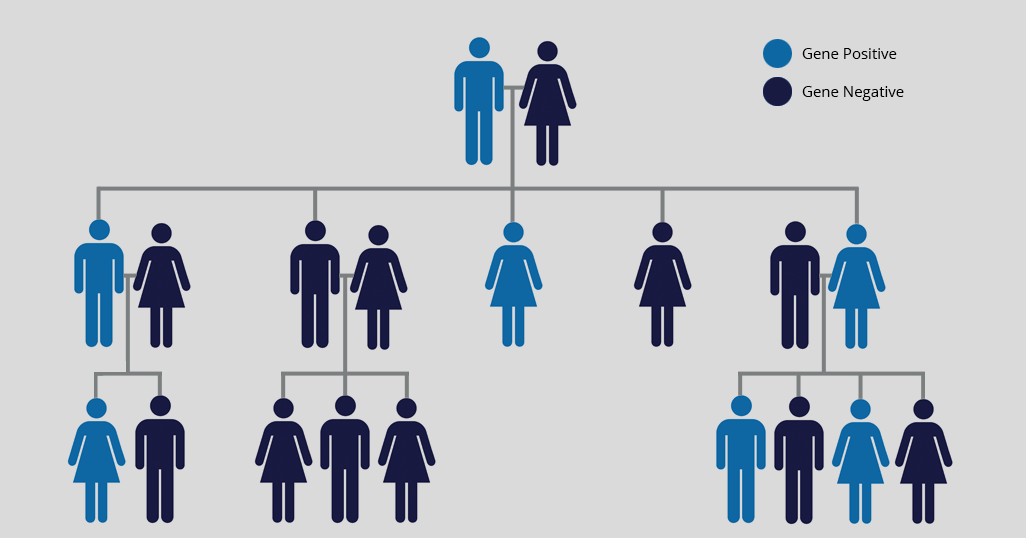
Huntington's Disease is inherited. That means, the only way a person get the disease is if a parent had it. There is a 50/50 chance of passing the affected chromosome on to a child. Here is a simple info graphic to breakdown the randomness of how it might spread though the generations.


I could get all technical on you and explain that it has to do with the number of CAG repeats on the 4th chromosome and tell you that the higher the number, the greater chance of getting the disease and the higher the severity of it. But, that isn't what really matters.  To understand what the disease is about, you want to know what it does to a person and why it matters to my family that you understand what this disease is all about. 

Here are some quick facts about the disease. 


While there are cases of Juvenile Huntington's Disease, they are very few and far between. The most common cases are adult on-set. The life span from on-set to the end of life is usually 25 - 30 years. However, since most people are not diagnosed until about midway through the onset, there is usually a much shorter life span once a diagnosis has been made. 

The delay in a diagnosis usually comes because a person familiar with the disease is living in denial that HD is the issue for the symptoms. For a person who is not familiar with the disease, for whatever reason, it takes a lot longer because Huntington's Disease is not the first thing that somebody considers when looking for the cause of the many symptoms a person is experiencing. 

Some of the symptoms:


Awareness matters. I hope that the information that I have shared today will help you in your understanding of the disease. Without awareness, we cannot find a cure. Without a cure, families will continue to lose people to the disease. Help raise awareness and find a cure!

Wednesday, April 1, 2015

The Parity Act: What It Is and Why It Matters

Dealing with a diagnosis of Huntington’s Disease is challenging enough. Especially if you have reached a stage in your life where you are exhibiting symptoms of the disease prompting you to get tested. So, when you reach that point where you can no longer work because of the disease and are not old enough to retire, you need an easy approval process for both Social Security Disability and Medicare.

As it stands today, the definition of Huntington’s Disease as defined by Social Security is inaccurate. The only symptom of the disease that they recognize as being a disability is the presence of chorea. If that was the only problem with the disease, it would not be a big deal. Unfortunately, that is not the case.

Huntington’s Disease affects the brain in a variety of other ways as well. Many of these other symptoms begin showing up long before the chorea begins to take place. They can be just as debilitating and make it impossible for a person to perform many of the duties that even the most basic of jobs requires. There are many cognitive and behavioral issues that can begin showing as far out as 10 years before any of the uncontrollable movements begin to take place. 

There are many different ways that loss of cognitive function can affect you. For example, say you are a UPS Delivery Driver that has to drive a truck around every day. You have the same route every day. You have several places that you need to stop at every day either to deliver packages or pick some up. Unfortunately, Huntington’s Disease has begun to affect your mind though, and one day you forget a stop on your route – even though you have had the same route for 10 years. This causes you to be reprimanded in some way. It continues to happen at random and you progress along the disciplinary action plan as set forth by your company until they have no choice but to let you go.

The situation really is beyond your control.  You cannot help that your brain has short circuited in such a way. It is not your fault that Huntington’s Disease has begun to wreak it havoc in your life making it impossible to do things that you used to do every single day. The last thing you need is to have difficulty getting the disability benefits you need because of this outdated definition of the disease.

Speaking from experience, it can take years of denials before being approved for Social Security Disability. From the time Robert’s brother first applied to when it was finally approved, it took three denials and nearly two years. Finally, thankfully, he was approved for benefits. It still took two years and caused a lot of hardship on him and us as his caregivers as well. Stress is not a good think for a person dealing with Huntington’s Disease and heaping this undue stress only makes things worse.
Plus, there is a mandatory two-year waiting period before a person can get Medicare after they have been awarded disability benefits. Two years is a very long time in the world of a person who has reached this stage in their condition. There are numerous medications that can help a person living with HD by minimizing some of the symptoms of the disease but that are not cheap and cannot be afforded by someone living on disability alone. There have been many who have died during the two year time frame because they do not have access to the medications that can help them.

Both the definition  of Huntington’s Disease as defined by the Social Security Administration and the two year waiting period for Medicare need to change. Currently, there is an act before Congress called the Huntington’s Disease Parity Act that is aimed at making these changes a reality.  We need them to pass it. Not just for my family, but for every family out there that has to struggle with this dreaded disease.  We need to urge our elected officials to pass this bill for every family out there.  

You can help!

For more information, visit the Huntington’s Disease Society of America’s Advocacy page to learn more about the bill and how you can help. You can also visit Raise Your Voice for Parity to locate your state representatives in Congress and encourage them to take action on this bill.  I hope you will consider doing so.


Thursday, May 29, 2014

Another Reason Why Awareness Matters

I keep coming across things that show why raising awareness about Huntington's Disease matters. Reasons that all of us who are some how affected need to educate those around us so that they know what it is. Raising awareness will stop stories like one I recently read from happening...

Throughout the month of May, the HDSA has been sharing daily stories of people that are living with HD. Some are very inspirational, some are heartbreaking and some bring hope. But one of them made my head want to explode. It was one that highlighted a lot of the misinformation that people have about this disease.

The story that I read was written by a mother who's daughter was in her mid 20's and had just received a diagnosis of Huntington's Disease. She told the story of how her boyfriend's father and brother were diagnosed with HD while they were dating. But his family told her that only men got it. That it never affected women. Yes, you read that right. They seriously told her that. I would beg to differ since Robert's mother, sister and cousin have all been infected by the Huntington gene.

So, needless to say, this lady was overjoyed when she was told that she was having a girl because that meant if the dad did have the disease, her daughter wouldn't inherit it. They broke up and lost contact before her daughter was born so this mother never knew that her daughter's father also inherited the disease. Imagine her surprise when her daughter was diagnosed with HD after she had been told that females couldn't get the disease.

Awareness matters! Miseducation, misinformation or overall misunderstanding cause problems that lead to stories like this. We have a duty as those exposed to Huntington's Disease to educate those around us and raise awareness so that people are getting true and accurate information.

Monday, May 12, 2014

I ❤ Someone with HD

I just read something that got my blood boiling big time. I wanted to throw something at my computer screen or hunt down this person that wrote it and wring their neck! But that person was too ashamed to even say their name - the person chose to post as confidential. I wonder why.

So, here is how the story goes...

I was searching for a t-shirt that I had seen a couple of weeks ago. It said "I Someone with HD". So that is what I googled. The very first search result was titled "Don't Marry Someone with HD". It turns out that this was a chat forum that somebody had started. I was curious as to what this person had to say so I clicked and looked at the forum.  This lady - because she refers to herself as a mother of some children - went on and on about how HD ruined her life and the life of her kids. She even went on to say that people with HD shouldn't get married or have children because it will ruin their lives. Apparently she was very bitter that her husband was diagnosed HD and had never told her that he might have it.
Every person has their own thoughts and opinions on the issue. I can respect the difference of opinion and won't be telling you if you are right or wrong. It is not my place.
 
Instead, I will share the reasons why I married my husband even though I knew he was HD positive and even though I knew that I had not chosen an easy path. I did it because of the simple fact that I love him with all of my heart and cannot imagine my life without him in it. I wouldn't have traded the last 10 years of our life for anything and look forward to many more amazing years with him. We have had a great time and made some wonderful memories that I will cherish for the rest of my life. If I had walked away from the man that God had chosen for me simply because it was going to be a struggle at some point down the road, I would have missed out on so much. I have always said I would rather have 10 minutes of happiness with the man I love versus a lifetime of never having had the chance. I still feel that way today.

Robert's grandmother always said that if she had known that her husband had HD, she never would have had children. She never would have taken that chance of her children inheriting the disease. I do understand that. But the one thing that I go back to is this. She had 3 children. Only 1 of them inherited the disease. The other two do not have it. You have no way of ever knowing if your children will get the disease or if they will be spared. Then, Robert's mother had 5 children. Only three of the five have the disease. And I know there are a lot of people out there that can honestly say the world is a better place having had Robert in it. I know I certainly think so.
The lady in this forum said she was going to become an advocate to support the idea that people with HD should never get married and never have children. Why not? Do they not deserve the chance at the same kind of happiness as everyone else in the world? Do they not deserve to lead normal, quality lives as long as they can until the disease takes over?

I do get that the disease can wreak havoc on more than just the person who is infected. As someone told me, it is more than just the person caring the disease that lives with it. The friends and family of the one infected live with it, too. It certainly isn't an easy road to walk. But, they are people just like everybody else and they deserve happiness just like everybody else. Leading a normal life and creating great memories will help to get a lot of people through the more difficult years to come.
Thankfully, most people in the forum responded by calling her out on her negativity and told her that she was wrong in her thoughts. I would have shared a few words with her, too but it seems the forum was closed for additional posts so I missed out. But, for anybody else out there, I just want to go on record that choosing not to marry someone because of something that will happen down the road at an unforeseen date. Would you rather have 10 years of wonderful memories with a person before they got sick or be alone and miss out on those memories because you knew they were going to be sick? I know my answer. Do you?


Tuesday, May 6, 2014

Not Talking About It Is Not The Answer

At a recent support group meeting, we were joined be a young girl. She is in her mid to late 20's and had recently been told she was gene positive for Huntington's Disease. She had lost her mother recently to the disease and her brother was in the advance stages of the disease. Even though she was not experiencing any of the symptoms, she made the difficult choice to determine if she had the disease. So, when she came here for the first time, she was dealing with a lot.

At the end of the meeting, she stayed to talk and actually asked Robert and I several questions. We did our best to answer them. Then, there was another lady who joined in the conversation. She was an older lady who was married to a gentleman who was in what would be classified as mid-stage. He showed obvious signs of chorea and was having trouble with coordination and some cognitive issues as well. The only thing that she really said was that the young lady should not talk about it and never tell anybody that she had the disease. It should never be discussed.

That bothered me. While I do understand that you might not want to necessarily share the information with your place of employment or your life insurance company, you need to talk about it. Your friends and family need to know about it. Others that have no experience with this disease and have never heard about it need to know about this disease. It has to be talked about.

One of the problems with Huntington's Disease in years past is that it was never really talked about. It was always that mom, dad, grandpa or whatever family member it was, was just sick. As a result they were often thought of as drunk or misdiagnosed as schizophrenic or another mental disorder. They might be told they had any of a number of disease but the one that the person really had. Because nobody was talking about. Because nobody understood the disease or knew that it was really what Aunt Sue was suffering from. So, not talking about it is not the answer.

To raise awareness, it has to be talked about. People who know about the disease because of a family member, a friend or even the person themselves has it needs to talk about it. In situations like Robert, this young lady and many others, it needs to be shown that even though the disease will kill you eventually, it does not mean that life has to end. Many people with HD have had wonderful lives even after their diagnosis. Granted, some of them got diagnosed before they began experience symptoms and not everybody has that luxury. But I have had the opportunity to see people that are in the mid stages of the disease and even some in the later stages of the disease. They all have been able to lead lives they could be proud of while living with the disease.

What I am saying is this: We have to talk about the disease. To raise awareness of this disease and the need to find a cure we need to talk about it. While you may not want to tell the world that you personally have it, you can still work to educate people so that they are not uninformed.

So, if you know about it, if you have experience with it in any way shape of form, you need to tell others about it. Educating others will raise awareness. Educating others will help to spread the word and give us a better chance of finding somebody that may be able to find the cure to put an end to this dreadful disease that plagues generation after generation after generation.

Thursday, May 1, 2014

Huntington's Disease Awareness - Why It Matters

Over the last couple of years, May has become a very important month to me. It is the month that has been designated as Huntington's Disease Awareness month. The goal is to raise awareness of the disease and how it affects not only the person with the diagnosis but also the family and friends around them. Because awareness of the disease matters.

This is something that is very close to my heart and the hearts of many of my family members because we are that group that is living with Huntington's Disease as a day - to - day reality of our lives. It may not be something that has an obvious impact on what I do every day, but it is there, constantly in the background of my thoughts. It is the reality of being in love with someone who carries around a positive diagnosis of Huntington's Disease.

One thing that makes all of this hard is the lack of knowledge that so many people have of Huntington's Disease. As I have always said, I know that better than anybody because I was one of them until Robert walked in to my life almost 11 years ago. When he first told me about it, I had no clue what it was. I had never heard of it before. So, I get the blank stares. I was one of them. But we need to change that. We need to raise awareness of this disease so that others know about it; so that others are aware of it and what it means. Raising awareness and knowledge about HD is important to help gain understanding of what the people or going through.

My knowledge of HD has changed how I view a lot of things around me. For one, when I see that person who looks like they are stumbling around like they are drunk, I wonder if that is really the case. Many people with HD appear to be drunk without a drop of alcohol in them. Prior to 1993, it was much more difficult to test for HD and many people were often misdiagnosed with other issues. The limited amount of knowledge about the disease and difficult testing and diagnosis of the HD gene. So, many people were walking around without the knowledge of HD. Understanding how the disease can affect a person matters.

Plus, even now, when we know so much about it, there is still a lot of the unknown.  It is hard to receive proper treatment for the symptoms a person faces. It is very hard to find a doctor that specializes or has adequate knowledge on how to treat an HD patient. In a previous blog, I talked about how Robert was given a medication to treat symptoms of HD when it wasn't even HD. If this first neurologist that he went to had more knowledge of HD, she might have understood that what he was experiencing had nothing to do with HD. Luckily we have been able to find a more experience neurologist in our area through recommendations of people in our support group. But, not everybody is as fortunate to live in an area that has a truly knowledge doctor. Raising awareness for doctors and teaching them about HD so they can adequately treat patients matters.

So, I hope that you will take a moment to read What is Huntington's Disease or visit The Huntington's Disease Society of America website and learn a little bit more about Huntington's Disease. To find a cure, we have to educate the world so they can understand. To help friends understand what Robert's family is going through, they have to be educate.  May is Huntington's Disease Awareness month and I want to make everyone aware of why this matters - not only to me and Robert but to the nearly 30,000 in the United States that have been given an HD diagnosis and their families as well. The impact of this disease is felt on so many more than just that those 30,000 that have been diagnosed.